Healthy Alliances: The Pauls of Persia
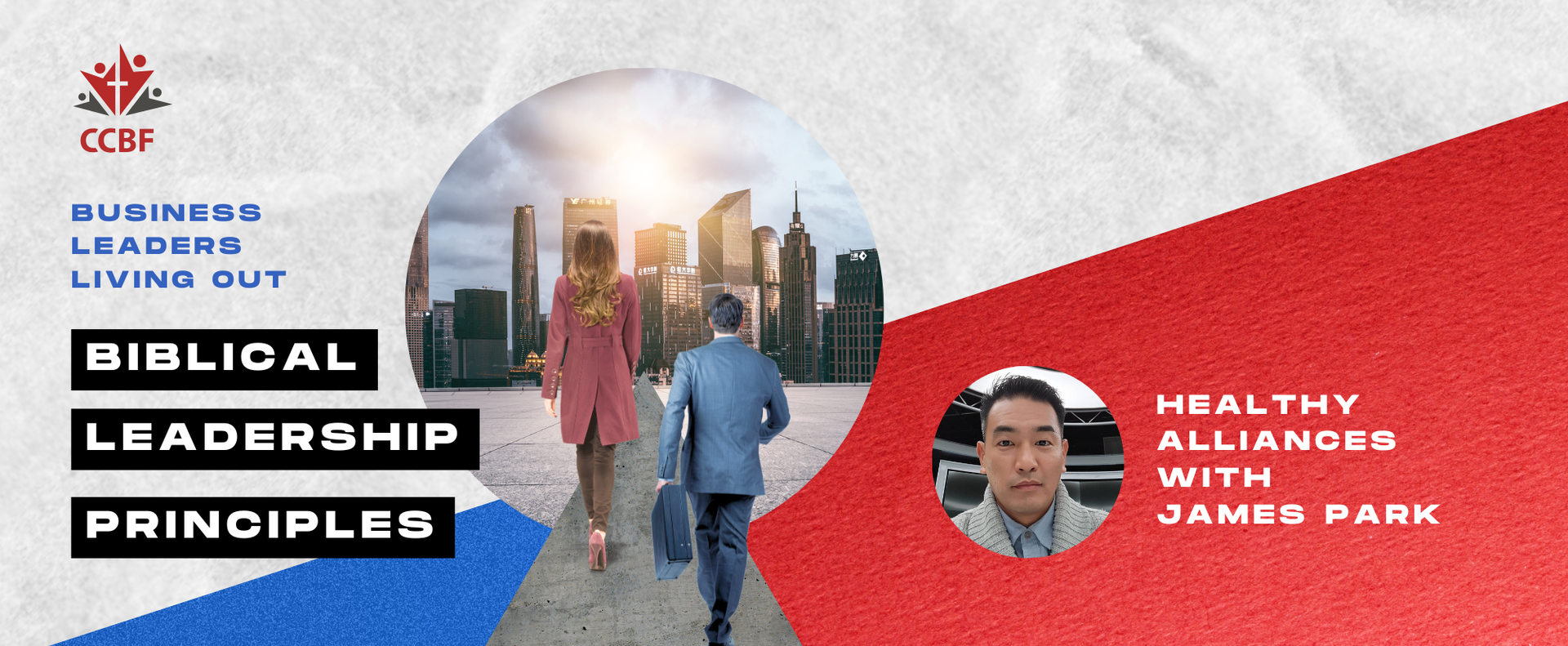
Healthy Alliances: The Pauls of Persia
An interview with James Park,
Director of Vision, Mobilization, and Strategy
E3 Canada
By Nathan Reid-Welford
Though many of us may have experienced healthy alliances or felt their impact—in life, career, church—it may not be something we have ever thought of defining. And while we may have an idea of what helps people work well together—trust, respect, communication— we may not be able to articulate the makings of a healthy alliance.
On the other hand, James Park, director of vision, mobilization, and strategy at missional organization E3 Canada, has.
“Healthy alliances are the main strategy for achieving a massive vision that can seem impossible.”
Having been a pastor, a social worker, and then working with E3 since 2020—first as a church planting mobilizer, then a global ambassador, and in his current role since April of 2026—James has become familiar with healthy alliances both in a practical and theological sense.
“In my previous roles, I travelled extensively to form coalitions around faith,” James says, recounting his journeys to geographical hubs Ethiopia, Columbia, Costa Rica, Thailand, and Dubai, meeting with ministry leaders from surrounding nations.
Now, with his new position shifting him back to Canada, James works with a team to develop networks for evaluation, ministry, and church training, to form alliances with other believers in the country and beyond.
To James, vision—particularly of significance—is the key uniting factor to build an alliance around a cause or purpose.
“If someone sees a big vision, they lock onto it. They see how their unique skills and talents can fit into fulfilling part of it.”
For his own work, he considers the “finishing of The Great Commission” this vision.
“It is too big for any one organization to say ‘we can do it ourselves.’ But together we can get there.”
Once this vision has been established and communicated, James believes a series of four pillars are necessary to strengthen it.
First is unity. Working and knowing the strength that two are better than one and achieving this through humility.
Second is obedience, accountability, and evaluation-based discipleship, which keeps the vision in mind.
Third is servant leadership, not seeing partners or workers as servants to your agenda, but instead serving others to fulfill the ultimate agenda.
Fourth is stewarding of time and talents efficiently.
These crucial aspects of healthy alliances are best understood by the Christian community, and by extension Christians in the workplace, because they are pillars of our faith, lived out by Jesus’ example.
“When Christians come together united [to solve a problem or fill a gap], there’s something about the presence of Jesus being in the same space that brings necessary encouragement, transformation, and the mindset to be able to do the tasks of their field,” James explains. “As they come together and seek the Lord, ideas begin to form and they create something.”
When considering his own work at E3 in relation to this notion, James specifically thinks of the declining state of Canada’s Christian church and the country’s changing spiritual realm.
“We can’t sit back and whine and complain. So, what are we going to do about it? At E3 we’re constantly asking that question.”
And the best answer to the problem? Alliance building.
In the practical sense, this has meant taking action through a venture called The Great Commission Network.
An initiative based in the Kitchener-Waterloo region, it gathers marketplace leaders who are passionate about seeing people come to faith, as well as ministry leaders, and creates a space to ask questions about demographics and strategize how they can reach people.
But in the broader theological sense, beyond simply getting upset or brainstorming tactics to preserve the Christian faith in Canada, the country’s changing demographics and infusion of faith backgrounds should be seen by Christians “as one of the greatest opportunities for The Great Commission to be carried out in our generation.”
“People find refuge in Christ,” James says, comparing his family’s story—who immigrated from South Korea—to the larger story of the rise of Christianity and the rebuilding of the once poverty-stricken nation.
“There’s something to be said about the effect that the Gospel has on a people group. If we can reach the nation groups by meeting with our neighbours, we can be reaching the Apostle Pauls of the Persian, Muslim, Hindu, and whatever other communities, and they can impact their spheres of influence.”
So, how can we get there?
James grins.
“Healthy alliances.”